Sublime Frequencies Communiqué

Sublime Frequencies Communiqué

Translate

02 April 2012

ERKIN KORAY San Francisco In Store Meet & Greet / Record Signing


  • Saturday, April 7, 2012 - 3:00pm until 4:00pm


Aquarius Records & Sublime Frequencies are pleased to present legendary Turkish musician
ERKIN KORAY in person at AQ records, SF.

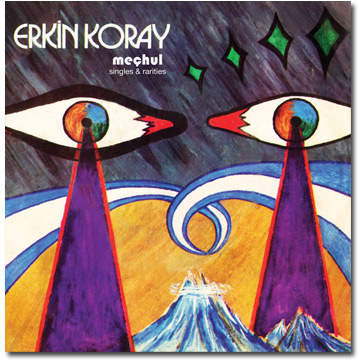
In his first and only promotional event within America to date, Mr Koray will be visiting Aquarius HQ to meet fans, and sign copies of his recent Sublime Frequencies release Meçhul – Singles & Rarities. 

This is a rare and unique opportunity to meet the true godfather of Turkish rock and psychedelia - an iconic guitar hero and songwriting genius with a voice of gold, who has carved out his legend across the last five decades. 

Erkin Koray was responsible for founding his country's first rock and roll group in 1957. Forging western sounds with his own inimitable musical mastery, he self-produced singles and LPs throughout the 1960s and 1970s that shook and altered Turkish society.
Erkin didn't stop at rock and roll. Over time, he began to find inspiration in folk sounds from Turkey's Anatolian interior, and radio broadcasts received from Egypt and Lebanon. He looked to the east from his west-leaning Istanbul perch, and began incorporating these sounds into his own work. This amalgamation was as unprecedented and unorthodox in Istanbul at the time as rock and roll itself had been in the 1950s. The resulting hybrid sound ignited what became known as the Arabesque music movement in Turkey – which continues to this day.

While Erkin has recorded and performed tirelessly throughout the years, both as a solo artist, and with the powerful groups he formed, his extensive back catalogue only began to be explored by the international community in the 1990s.

He is now recognized as one of the foremost global leaders of psychedelic, folk rock, pop and balladry. His music has stood the test of time more than many of his western contemporaries and influences have managed to, and his prolific work ethic has not ceased. He continues to live and breathe music, performing epic concerts, and continuously plotting new recordings and strategies. His vision and integrity, coupled with his pronounced world views and inherent musical greatness, have made him the unique and magnificent living legend he is today.

After years of bootlegged reissues on the market, Koray has been engaged in a decade-long battle to win back the rights to his own music both within Turkey and internationally. 

In 2011, Sublime Frequencies worked together with Mr. Koray to present Meçhul – Singles & Rarities (SF067), compiled by Mark Gergis and culled from the personal archives of Erkin Koray. It stands as the first collection of its kind, authorized and approved by the artist himself. 

The album features tracks that have been previously unheard and/or unavailable in the west. Ranging from the sublime to the surreal, these tracks offer an essential glimpse into the extensive repertoire of the great Erkin Koray.


Aquarious Records
1055 Valencia Street  San Francisco, CA 94110
(415) 647-2272


SUBLIME FREQUENCIES PO BOX 17971 SEATTLE WA 98127 USA

23 March 2012

S.F. 2009 Interview Podcast: Hisham, Alan and Mark


Sublime Frequencies – Music from the Backyard Melting Pots


2009 - Juli - Sublime Frequencies
Melting Pot ist eine Metapher für Orte, in denen verschiedene kulturelle Einflüsse zusammenfliessen und etwas neues ergeben, die Hinterhöfe sind im übertragenen Sinne die abseits gelegenen, unbekannteren Regionen der Welt, in denen Sublime Frequencies ihre Klänge sammeln. In der Aufzeichnung einer Diskussion stellen die Nordamerikaner ihre Arbeit vor. Als global traveler dokumentieren die Mitglieder des Kollektivs – Alan Bishop, Hisham Mayet und Mark Gergis – lokale Klangbilder zwischen Nordafrika und Südasien. Radiocollagen und eine stetig wachsende Platten- und Audiokassettensammlung von historisch-traditionellen Klängen bis hin zur urbanen Musikkultur dieser abgelegenen Orte bilden das wertvolle Archiv von Sublime Frequencies. Es soll ungefiltert und unverfälscht die westliche Welt erreichen, um einen (musikalischen) Dialog zwischen Osten und Westen, Nord und Süd, den glitzernden Shoppingmalls der Industrieländer und den versmogten Hinterhöfen zu eröffnen.
Dabei kritisieren die Mitglieder von Sublime Frequencies etablierte Mainstream-Strukturen: ihre Arbeit formiert eine Gegenfluß zu den Strom an Kultur, mit denen amerikanisch und europäisch dominierte Medien- und Musikkonzerne den Rest der Welt zu betonieren. Sie finden sich nicht damit ab, dass ihre Projekte in Schubladen gesteckt werden: weder akzeptieren sie wissenschaftliche Definitionen noch die üblichen kommerziellen Konzepte unabhängiger Plattenfirmen. Ihnen geht es um die ursprüngliche, rohe Musik – und sie zollen ihr in ihrer Originalität Respekt.
Im Podcast stellen Sublime Frequencies ihre Arbeit, ihre Motivation und aktuelle Projekte vor. Die Diskussion fand anläßlich von Structures Node 1: Global Alchemy im Juni 2009 statt, eine Veranstaltung der Club Transmediale.
Podcast interview is in English

Link for podcast below...

http://www.bln.fm/2009/07/sublime-frequencies-music-from-the-backyard-melting-pots/  


SUBLIME FREQUENCIES PO BOX 17971 SEATTLE WA 98127 USA

12 March 2012

NOW OUT! GROUP DOUEH: ZAYNA JUMMA LP


SF066

LP Vinyl Gatefold Edition - Group Doueh's latest record is here and the plot continues to thicken! From the gorgeously cracked yet all-embracing opening drum roll of Zayna Jumma (the title track), it's evident this band is hell bent on redefining the sound of its influences and in turn, shape the future sound of its surroundings. It's musical alchemy in its purest, most remarkable form, pushing at the boundaries of geographical divergence while simultaneously speaking to the shared resonances between Western rock rhythms and the pulse of the Saharan trance tradition.


Since its inception, Group Doueh's ability to craft pop hooks from a foundation of saharoui roots music has been a manifestation of sheer song craft and innovation. The tracks on Zayna Jumma are a deeper excavation of the group's forged terrain: a collision of contemporary Afro-Saharan grooves balanced with the searing modalities of Doueh's desert origins, finally nuanced by the transcendental pop/rock/desert blues elements honed from gestating in the fringes of the Sahara desert. 


For the latest installment of this Dakhla family's musical dynasty, Doueh recruits his next eldest sons El Waar (synth) and Hamdan (drum kit) , and wife Halima is augmented by three female backup singers. The band keeps evolving and this album reveals its newest phase - that of a formidable ROCK unit. 


The songs on this record were recorded in 2010, a busy year for Doueh, maintaining its day job as the go-to group of the Saharan wedding industry while still managing recording sessions and a tour with Tony Allen (Fela Kuti's long time drummer). On the heels of this momentum, Zanya Jumma is released to coincide with the group's 2011 spring/summer tour of the UK, Europe and a first ever US tour. 


This band continues to redefine the musical landscape and keep listeners amazed and transfixed. It's the perfect ecstatic music for the impending apocalypse, a rogue sound rooted in the past and yet boldly harnessing the aural possibilities of the landscape ahead... go ahead and jump aboard. Recorded on location in Dakhla, West Sahara in 2010 by Hisham Mayet.

SUBLIME FREQUENCIES PO BOX 17971 SEATTLE WA 98127 USA

25 February 2012

JO Magazine piece on S.F.


ECSTATIC SOUNDS


The American music label Sublime Frequencies seeks out some of the rawest musical traditions from North Africa and the Middle East, creating international phenomena out of wedding performers from the Sahara to Syria

Words by Owain Lawson
ecstatic-sounds-kicker
Group Inerane, a Taureg band from Niger, plays a blend of blues and Saharan folk.

In November of 2010, Hisham Mayet, cofounder of the Seattle-based record label Sublime Frequencies, screened his 2008 video documentary, Palace of the Winds, at a corner-store diner that had been converted into one of Montreal’s hip destinations. With a collage of music and images captured in Morocco and Mauritania, the film’s elegant visions of desert landscapes and intimate home concerts contrasted sharply with the bleak Canadian cold and wet outside. The film was projected over the lunch counter to a small audience of cognoscenti, the kind of engaged and voracious followers the taste-making label attracts. While Palace of the Winds was, like many Sublime Frequencies offerings, an engaging but opaque musical journey without any narrative structure, Mayet was open and affable, pleased to recount the remarkable stories behind how his films and albums are made.
Images
fileit1ecstatic-sounds1
sf069-300dpi-frontinerane-cover300dpi
doueh_digipak.coveronly300pageim1
Born in Libya and raised in London and California, Mayet is an inveterate traveler and passionate documentarian who, along with his collaborators at Sublime Frequencies, voraciously seeks out, records, and collects music. Rather than the disengaged, professionally produced sounds that typify mainstream world music, the label deliberately seeks out raw, immediate documents of unique musicians from remote areas, captured with whatever unsophisticated recording device is at hand and released in glorious low fidelity. Recalling the work of Alan Lomax, the legendary Smithsonian archivist and ethnomusicologist who made field recordings of disappearing American folk music in the 1930s, the label celebrates the special kind of casual proficiency found among folk traditions and grass-roots working musicians. The immediacy of the recording process communicates something transcendent and intangible, imparting the sensation of being in the moment, of being at the wedding party, street corner, or living room where it was performed.
“I’ve been traveling since I was in the womb; my mother flew to Lebanon while pregnant with me. I think that I absorbed so much in terms of different cultures in those formative years, that it’s been hotwired into my system to have it be the only work I do now,” Mayet explains over e-mail. “I’ve been physically and systemically collecting, recording, and filming and sharing material for over ten years now. I suppose the main reason, is that with these sounds and images from all the different areas I’ve been exploring, some of the finer examples of the music and culture and geography are so sublime and ecstatic that it would be a crime not to.”
Redefining the notion of what a record label can be, Sublime Frequencies collaborators discover, record, and produce their releases in entirety; as such, the label is a curatorial artistic project in its own right. Founded in 2003 by Mayet and Alan Bishop, the label began as a means to disseminate the vast archive of footage and recordings they and their friends had amassed over decades of travel. Though their initial inspiration may seem casual and unambitious, the label immediately set to releasing records in rapid succession, made possible by pressing short runs that sell out quickly, and now have a prolific catalog of sixty-nine albums and DVDs of music by artists from the Middle East, North Africa, and Southeast Asia.
While many of their releases are compilation-oriented, such as 2004’sRadio Palestine: Sounds of the Eastern Mediterranean, a visionary collection of music recorded directly from the radio by Bishop during a visit there in 1985, they’ve also re-released professional recordings by such legends as Omar Korshid, the guitar virtuoso of Umm Kulthum’s orchestra, and Erkin Koray, the father of Anatolian heavy rock, along with regionally specific compilations such as Choubi Choubi! Folk and Pop Sounds from Iraq.
In 2007, the project expanded to include single-artist releases by current bands, and the label dropped what would become its most prominent releases. Omar Souleyman from Syria, Group Inerane from Niger, and Group Doueh from Western Sahara have since emerged from the Sublime Frequencies catalog to become standouts, and have been brought by the label to tour North America and Europe to raving success. In the same way Lomax’s recordings inspired new generations of American folk musicians from Woody Guthrie to Bob Dylan, ten years on, Sublime Frequencies are seeing their bands play major international festivals and influence Western musicians, as evinced by Souleyman’s 2011 collaboration with Björk.
Group Inerane, a psychedelic Tuareg rock outfit, is the go-to wedding band in the war-torn Agadez region of northern Niger, deep in the Sahara. Band leader Bibi Ahmed performs a popular guitar style that emerged from Libyan refugee camps, a mix of traditional Saharan folk and electric blues, with a breathtaking natural virtuosity that recalls Hendrix or Neil Hagerty, backed by a chorus of singing and trilling female voices. Their 2007 release Group Inerane: Guitars from Agadez vol. 1 remains a remarkable and durable album. “That was recorded about forty-five minutes within meeting them for the first time,” Mayet says. “It was as ecstatic an experience as I could have ever wished.”
Mayet met Group Inerane while gathering footage for his film Niger: Magic and Ecstasy in the Sahel in 2004. The film closes with an extended performance by Inerane, ten gaily dressed men and women dancing gently while singing and playing in a small brick room, surrounded by a giant sheet of pink, rose-print fabric. Mayet continued to visit and record them and Group Bombino, another Agadez-based group of musical revolutionaries, throughout the Second Tuareg Rebellion that shook the region from 2007 to 2009. It was a hard time for the musicians: Most were exiled to Burkina Faso, and Adi Mohammed, the second guitarist of Group Inerane, was shot and killed during the tumult.
Two years later, the surviving members and their new guitarist Koudede Maman toured Europe. “Touring has opened them to the possibility of affecting the West in ways they would have never dreamed of,” Mayet says. “Most of them had traveled to many places in Europe, so I think they went at the tour as a job more than an adventure.” While Sublime Frequencies has had a profound impact on their lives, Mayet suggests the band’s international acclaim doesn’t carry much significance at home: “I think their immediate community is cognizant of their success overseas but in terms of them being awarded a local medal of honor, that’s still some time away.” Bearing copies of their newest release Guitars from Agadez vol. 4, Inerane returned home from tour to Agadez, which remains desperately impoverished and unstable, its Libyan refugee camps swollen since the war last summer.
On his first overseas tour in 2010, Souleyman gave an instantly legendary performance at the Montreal Jazz Festival. After days of torrential rain had decimated attendance at the outdoor festival, Souleyman took the stage mid-afternoon and, as the first of his signature, wild dabka sounds erupted from the speakers, the skies parted and remained clear for the unyieldingly energetic forty-five-minute set. Souleyman, from Hassake in northeastern Syria, has a deceptively traditional appearance—a middle-aged man with a large mustache, sunglasses, and kuffiyeh—but his music is a kinetic, rugged, and original take on dabka, and his regal, commanding stage presence is completely invigorating. Given that his image conforms to an Arab stereotype demonized in the West, a more unlikely figure to become an underground sensation is hard to imagine.
Souleyman was discovered for the label by Mark Gergis, a relentless traveler who curates many of the label’s Middle Eastern releases. “When I travel somewhere,” says Gergis over e-mail, “I’m listening to everything, meeting people, recording sounds and music from the radio, asking questions.” On his first trip to Syria in 1997, Gergis discovered Souleyman’s music on heavy rotation on local radio and sold at cassette kiosks. “I was searching for rawer forms of Syrian and Iraqi dabka music at the time, and Omar’s sound really struck me. I bought as many cassettes as I could and continued to visit the country over the next decade, always buying his latest issues.”
Since his first release for the label in 2007, Souleyman has become one of their most sought-after artists, selling out his US record pressings in days. By the time he was approached by Gergis, Souleyman had already achieved the celebrity he still enjoys in Syria, where he makes a living as a hugely popular wedding performer. Gergis says, in Syria, “Omar is known for being something of an international celebrity, which is probably a curious and anomalous thing amongst the Syrian dabka circuit, but it hasn’t really affected how he works or performs at home ... It was quite a surprise for everyone, including him, but when you think about it, it makes sense. He is a natural stage man with classic showmanship and charisma, and the music is incredible, and it’s an urgent type of Arabic music that really hasn’t been heard much in the West.”
Bringing these artists overseas has not always been an easy process. During the last year of violence and repression in Syria, the label has been concerned about the kind of exposure Souleyman has received, to the point of having a “no-politics policy” when granting interviews with him. “In his own words, he is a singer, not a politician, and we like to keep it that way,” Gergis says.
To whether there’s a chance touring and working with an American label might have a negative impact on Souleyman at home, Mayet responds emphatically, “I think it’s quite the opposite. The main issue is how the Western press treats their story. Most journalists are idiots ... Some journalists are fishing for a political angle and sometimes that gets complicated because most of the countries that we deal with are on top of ‘terror watch’ lists. When a journalist tries to make a connection to a current political situation, it compromises the musicians in a severe way. None of them are political outright.”
While it’s first and foremost a project to celebrate and transmit music, Gergis concedes there’s an implicit political dimension to Sublime Frequencies’ choice to expose Western audiences to joyful music from Syria, Iraq, Libya, and other countries that have been made objects of fear in the Western imagination.
“All of the Middle Eastern releases I have worked on try to humanize the region and let Western audiences listen in to and think about sounds from a place they may never have” considered before, Gergis says.
Mayet suggests he’s happy to issue releases that reflect his interests, experiences, and values and let them speak for themselves, to keep himself free to explore the music he finds personally fascinating without worrying about how the project is interpreted. “Sublime Frequencies will continue to operate under its own set of rules,” he says. “That was how we started, and how we will finish this project.”


SUBLIME FREQUENCIES PO BOX 17971 SEATTLE WA 98127 USA

21 February 2012

GROUP DOUEH: ZAYNA JUMMA Limited Edition LP out soon


Group Doeuh – Zayna Jumma
May 24th, 2011
Sublime Frequencies
Score: 8.2
Planting yourself before a mirror and peering into it is child’s play. Most days, we might merely process the reflection of a muddled silhouette and go about our thankless business should no patent mars or juts rear their wretched heads into our line of sight. We aren’t moving forward — only sideways into a sea of perpetual thrall. Seeing rather than just looking, however, can set us free and consequently cries out for a much sturdier backbone. We’re forced to confront our frailties and vices and fundamental natures, and the snag of how we’ll reconcile them with our ambitions. Indelible daubs crawl out from under our skin, and we stand unable, nay unwilling, to gloss over them any longer.
This is an about-face until we’re blue in it.
Few contemporary African acts have presented as diverse a discography as Group Doueh has thus far, and even fewer have performed their songs with the verve these Saharans have conjured on their three previous full-lengths (here’s a rare occasion where I’m counting a compilation — 2007′s Guitar Music From the Western Sahara— as a studio debut). That being said, a multiplicity of identities has emerged through the band’s rough-hewn bluster and solemn elementalism. These records have been solid on their own, but if push comes to shove, we couldn’t offer an accurate read on who Group Doueh truly is.
The catalog kicked off in endearingly clatter-laced, guitar-driven iridescence, then moved onto more brooding, impassioned pastures, and finally came its quietest, most traditional affair to date with last year’s Beatte Harab.
On their latest, Doueh and company erect one singular voice by pulling from their past lives and treating each angle with a deft balance — tracing a fair middle ground while skirting the mundane grip of settlement. Zayna Jumma comprising GD’s third full-length in three years, one could have expected them to tire from their prolificacy but the very opposite scenario unfolds. After a spell of stone-faced serenity, the formidable troupe has returned in fine form, evidenced first and foremost by Doueh’s enchanting electric guitar. It’s BACK in a big way. ‘Ishhadlak Ya Khey’ and ‘Zaya Koum’ present a brief albeit fulgurous suite as sleazy, distorted guitar pairs with communal chants to weave psychedelic oases in the arid desert air. The tunes are groovy as can be, like an interstellar garage funk band jamming with the entirety of its astral might…in the Sahara.
A wondrous upshot of the pure leader’s revival is the galvanizing tints it shines on his troupe. Where the previous two LPs appeared so concerned with portraying a mood that the charming esprit de corps deeply embedded in Guitar Music somewhat dissipated, here, every call is met with an answer, every component holds its ground. Opener and title track ‘Zayna Jumma’ captures this cooperative elan straight out of the gate, affirming that the playfulness of old is indeed back for seconds — a spirited, layered rock ‘n’ roll gallop accented by piercing vocals shooting up through the sand in a hair-raising heartbeat and retracting just as quickly.
Elsewhere, ‘Met-Ha’ and ‘Aziza’ provide dulcet respites from the storm. Slower, earthier entries, the two are rooted in old-school fare; hymn-like vocals, handclaps, and gentle folk arrangements acting as a spiritual intermission of sorts. A prayer for good fortune.
In the end, though, the crux of this journey is that mammoth of a guitar and its finest showcase is ‘Jaguar Doueh’. The instruments cascade and trip over themselves from the outset, leaving the treated guitar to fend for itself. Gathering the requisite fortitude to carry on, the axe is brandished skyward to stare down an inconceivably clear firmament and the scorching, oppressive orb at its core. Doueh absorbs its all-powerful glow, if only for 4 minutes, and just barely manages to harness it, like he’s swept back to adolescence with the world dangling at his fingertips. It’s awkward, it’s cumbersome, it’s fascinating. Gleams pour out now and again, on irregular cycle, and these slapdash pocks come to represent our oneness strewn across once uniform plains to reinforce its sanctity.
Decades in the works, Group Doueh’s sundry slants have conflated into one distinct trajectory. Despite the guitar rightfully at the helm, the vocalists, the percussionist, they all carry the mail at various junctures of Zayna Jumma. There’s no restraint on hand, no hesitance chiming in.
Closer ‘Wazan Doueh’ perfectly bottles the act’s newfound equilibrium, Touareg-style hollers yielding to a jarring start/stop countenance courtesy of guitar and drums. Through poise or panache, the track brushes off its mazy coils and comes to document GD’s continual shake-ups: raw and welcoming, melodic and tempestuous, fun-loving and contemplative. It all convenes under one banner, effortlessly, as though the strokes weren’t always meant to be shortened. They aren’t at all.
Self-discovery is often draining, daunting to even consider — let alone commence. It’s spun out, ghosts of our past and glimmers of our future halting any headway to an unctuous grind.
Group Doueh, for its part, dives right in without a second’s apprehension. It never pauses, never protracts. It flows to the hilt with small-town coarseness and candor and chirpy excitement over the yellow-brick road at its feet as well as the dusty, long overdue promised land that awaits just around the bend.
Vinh Cao
A limited Edition LP version of Group Doeuh's Zayna Jumma 
will be available on the Sublime Frequencies web site soon...

SUBLIME FREQUENCIES PO BOX 17971 SEATTLE WA 98127 USA
http://www.sublimefrequencies.com/

06 November 2011

GROUP INERANE 2011 EUROPEAN TOUR: LIVE IN PARIS VIDEO


SUBLIME FREQUENCIES PO BOX 17971 SEATTLE WA 98127 USA
http://www.sublimefrequencies.com/

29 October 2011

GROUP INERANE: GUITARS FROM AGADEZ Vol 4 SF069 "Tehiteyman"


Emerging from the political turmoil of the Tuareg rebellion in Niger, Group Inerane's adventurous guitar sounds are well grounded in the tradition of Tamashek guitar music from their region. Originally born in refugee camps, this so-called desert blues spread the Saharan desert and managed to reach international audiences at the turn of the millennium, mainly through Malian outfit Tinariwen. 
Though this context helps put Group Inerane’s recordings in a nice historical context with the rest of the Sublime Frequencies catalog, most listeners on the western side of the Atlantic are likely to be turned on by the mesmerizing riffs and minimal rhythmic patterns that climb their way into full-blown psychedelia. With its simple arrangement and crawling groove, "Tehiteyman" is among the band’s most hypnotic tracks, and even though sometimes it may sound like a fully formed song out of the American avant-garde, it's actually more likely to be heard fueling the dance party at the wedding gigs that they play back at home. 
--Pierre Lestruhaut, International Tapes


Sublime Frequencies will be releasing the CD version of Guitars From Agadez Vol. 3 alongside a new 7" as part of Group Inerane's upcoming European tour


SUBLIME FREQUENCIES PO BOX 17971 SEATTLE WA 98127 USA
http://www.sublimefrequencies.com/